Türkic Alphabet
Contents of section Türkic Alphabet
|
Introduction |
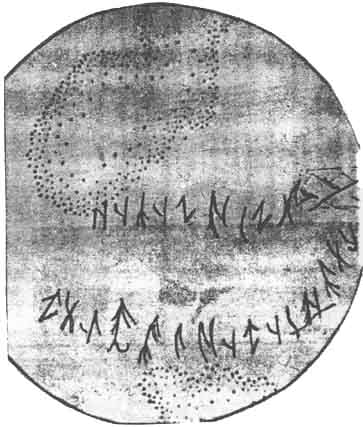
The oldest inscription read the Türkic alphabet, the Issyk Inscription, written on a flat silver drinking cup, was found in 1970 in a royal tomb located within Balykchy (Issyk), a town in Kyrgyzstan near Lake Issyk, and was typologically dated by the 5th c. BC. The first known inscription in the related Karosthi script was found in Pakistan and dates to 251 BC.
The inscriptions in Türkic alphabet were not limited to Türkic languages, as is evidenced by Slavic inscriptions of the pre-Glagolic time (before 9 c.). It is also notable that the emergence of the Nordic runic script roughly coincides with the expansion of the Hunnic Empire into the N. Europe and Scandinavia.
The latest preserved inscription in the Türkic alphabet was found in Hungary and dates to 1699.
During the millenniums of their history on the expanses of Eurasia, the Türkic-speaking people also used other systems of writing.
|
Links |
||||||||||||||||||||||||||||||||||||||||||||||||||||||||||||||||||||||||||||||||||||||||||||||||||||||||||||||||||||||||||||||||||||||||||||||||||||||||||||||||||||||||||||||||||||||||||||||||||||||||||||||||||||||||||||||||||||||||||||||||||||||||||||||||||||||||||||||||||||||||||||||||||||||||||||||||||||||||||||||||||||
Azgar Mukhamadiev PROBLEMS OF LINGO-ETHNO-HISTORY OF THE TATAR PEOPLE From the article “Turanian Writing” in the book “Problems Of Lingo-ethno-history Of The Tatar People”, Kazan, 1995, page 38 TURANIAN WRITING |
||||||||||||||||||||||||||||||||||||||||||||||||||||||||||||||||||||||||||||||||||||||||||||||||||||||||||||||||||||||||||||||||||||||||||||||||||||||||||||||||||||||||||||||||||||||||||||||||||||||||||||||||||||||||||||||||||||||||||||||||||||||||||||||||||||||||||||||||||||||||||||||||||||||||||||||||||||||||||||||||||||
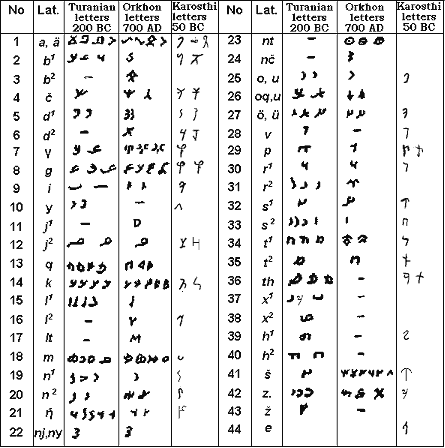
Table 1Comparative chart of Turanian and Türkic alphabets
|


|
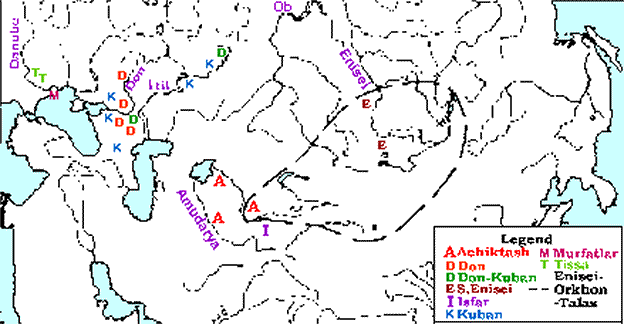
Distribution of the the Euro Asiatic and the Asiatic groups of the Türkic alphabets |
|
|


Issyk Inscription
http://www.lostlanguages.com/saka.htm => Try http://web.archive.org/web/
TürkicKök-Türk alphabets
Oldest known record of the Orkhon Alphabet
http://www.tonyukuk.net/Orkun.ttf => Try http://web.archive.org/web/
http://www.tonyukuk.net/tongiris.htm => Try http://web.archive.org/web/
http://www.omniglot.com/writing/orkhon.htm
http://www.antalya-ws.com/futhark/FUTHA2E.HTM Oldest inscriptions in futhark
HungarianTürkic Writing
http://fang.fa.gau.hu/~heves/runic.html => Try http://web.archive.org/web/
SlavicWriting
http://members.tripod.com/~Groznijat/pb_lang/suppl3.html
RunicScript
http://www.antalya-ws.com/futhark/FUTHP2E.HTM
http://www.turcoman.btinternet.co.uk/futhark-alphabet.htm => Try http://web.archive.org/web/
Türkic Perso-Arabic script